
What is Ajvar?
Ajvar is one of the most popular vegetable spreads in Croatia. The sweet and smokey aroma from roasted peppers keeps well in the jar to remind you of hot summer days and their abundance.
Making ajvar is so ingrained in our cuisine that we can't imagine zimnica (pickles and preserves) without it. As such, we would never make ajvar outside of September, when red peppers and eggplants become ripe and juicy under the hot sun.

Being in tune with the seasons means getting the best aroma from the vegetables. And in the winter, when we open a jar of ajvar, our nose is flooded with the whiffs of delicious, carefree summer.
Spend time with a Croatian family during the ajvar season, and you'll notice two things. First, there is a task for everyone, so all family members gladly partake in making it. Second, we exchange jars of ajvar with neighbours and friends. Not so much to compare recipes but to convey our feelings of closeness.
Why? Ajvar is a labour of love because making it takes time and effort. So, we give and receive it like any other expression of such deep feelings.
Ingredients for Ajvar Recipe
Ajvar is made with red peppers and eggplants (aubergines), which are first roasted and then cooked into a thick consistency. There are other spices added to ajvar as it cooks. But minimal seasoning is needed if you pick the right vegetables at the right time – when they are ripe.
Main Ingredients For Ajvar Recipe
Red peppers (capsicum) and eggplants (aubergines) are the basic veggies that make ajvar so tasty. They are roasted without any seasoning. But once you grind them and are ready to start cooking ajvar, it's time to add more ingredients.

First, there is vegetable oil, which is essential for a creamy ajvar texture. Oil is added in increments, so I like to include olive oil just before ajvar is cooked. Next is salt, black pepper, garlic, and vinegar.
Optional Additions for Flavor Enhancement
Chopped fresh parsley leaves will give your ajvar more complexity in flavor. The green seasoning also looks nice when ajvar is served or spread on a slice of bread.
The most essential optional ingredient is chilli. If you want spicy ajvar, adding chilli flakes as it cooks is easiest. The amount, of course, depends on how much heat in the food you find enjoyable and tolerable!
Choosing the Right Peppers and Vegetables
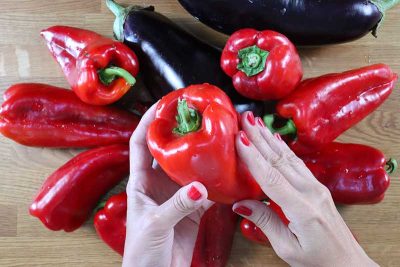
Not every pepper or eggplant produces excellent ajvar. You must know which varieties to pick to get the most out of their natural flavor. Red Bull's horn pepper is the best type of pepper. It's mild and sweet and develops a fabulous smokey aroma when roasted. It's also effortless to peel. And since lots of peeling is involved in making ajvar, you will want to get this variety of peppers.
If you can't find red Bull's horn peppers, look for other red, long, and sweet-tasting varieties. Try red cubanelle peppers or red banana peppers.
Eggplants need to be dark purple, the variety that ripens in the late summer. Our go-to type of eggplant in Croatia is called 'Diamond', but 'Black Beauty' also delivers excellent results. Both are praised for not being bitter at all. I suggest not using other kinds of eggplant, such as striped or white.
Variations of Ajvar
Ajvar comes in several versions, depending on its flavour and cooking method. If you're only eating it, you will be interested in its taste. But if you're a home chef, you can also pick your favourite culinary technique.
Mild vs. Spicy Ajvar
Mild ajvar has a lovely sweet note that naturally comes from red bull's horn peppers. The right type of eggplant, with no bitter aftertaste, gives it creaminess and a pleasant tang. There is no need to add chilli flakes to achieve this balance of flavours.
However, if you prefer ajvar with a kick, you'll want to add chilli flakes as ajvar cooks down into a thick texture. It's better to add chilli flakes than raw chillies to keep the soft and gooey texture. Raw chillies don't blend in with the rest of the vegetables. Even if you love spicy food, stick to a reasonable amount of chilli flakes. You want to avoid overpowering the aromas of fresh vegetables and burning your tongue.
Sweet Ajvar Twist
Ajvar made from roasted veggies doesn't call for added sugar. This is the benefit of red Bull's horn peppers. As they roast, their sweetness is enhanced until it becomes almost honey-sweet.
When pressed for time, some people cook the vegetables instead of roasting them. In this version of the ajvar recipe, you will want to add some sugar to the pot while the vegetables cook. Ajvar will end up with the same note of sweetness as the one from roasted vegetables. This is just a matter of adjusting the seasoning because we used a different cooking method.
In essence, there is no sweet ajvar that tastes like a dessert. Nor is it ever served as a sweet dish.
Ultimate cookbook of traditional savory Croatian Dishes
This glossy, full color edition boasts: 100 step-by-step recipes, 386 pages, 700 images & expert cooking tips

Smoky Flavors in Ajvar
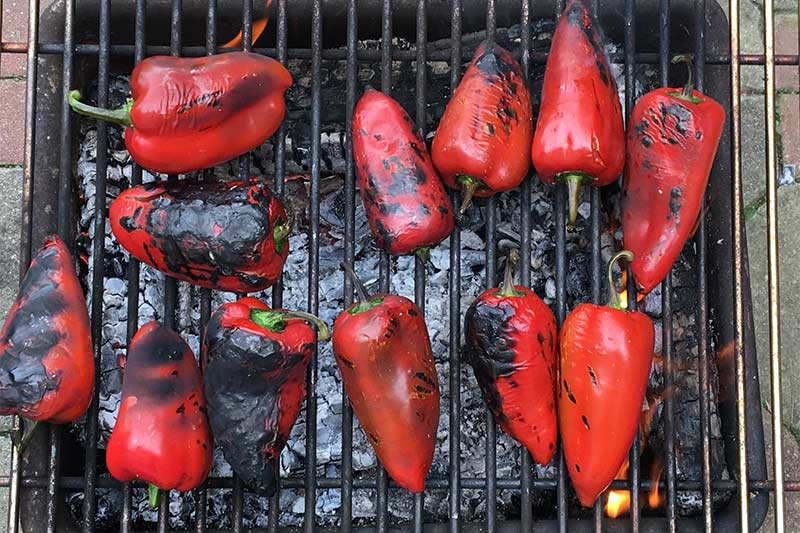
People will say there is almost no difference between ajvar with cooked and roasted vegetables. I disagree. There is only one way to achieve the alluring smokiness of ajvar: roast the veggies. Or even better, grill the vegetables on a wood-fired grill to kick it up a notch.
Remember, making ajvar is a ritual that takes time. So why not set aside a weekend to produce the best ajvar ever? My preferred way of preparing ajvar is to go to my Mum's house, where we have a large grill, and prep the vegetables slowly... Turning each pepper and eggplant over a flame until they get charred and smokey.
Serving Suggestions
Paired with ćevapi or spread on warm, just-baked bread, ajvar is food that seems straight out of paradise. It's also perfect for all those picky eaters who must be force-fed vegetables. Remember this next time you're having a hard time getting your kids to eat their five veggies a day.
Traditional Pairings with Ajvar
Whenever you order grilled meat in a Croatian restaurant, a dollop of ajvar will be served on the side. Ćevapi with ajvar is another time-tested combination. Even when you get them tucked inside a lepinja (flat bread), you will get a little blob of ajvar as a side dish. Ajvar is a perfect match for any meat. You can order it as an extra if it's not included on a plate. All restaurant menus have it listed.

Ajvar as a Dip or Spread
There are more ways to eat ajvar aside from dipping ćevapi into it. Don't think of ajvar only as a relish or a dip. It becomes one of the tastiest spreads when you make it thick enough following my ajvar recipe. Imagine freshly baked country bread topped with a thick layer of ajvar. It melts in your mouth.
Finally, it's not uncommon to devour ajvar straight from a jar. My husband Nik does this in the wee hours when the hunger strikes. He opens the fridge, gets a spoon and fills his mouth with ajvar like there is no tomorrow.
When you run out of homemade ajvar, try this great spicy ajvar featured in our Croatian Food Box.
Storing and Preserving Ajvar
Ajvar, made in the late summer, can last the whole year. It rarely does, though, because we eat it in a few months. But if you store it correctly, you can enjoy it well into the following year when it's time to make a fresh batch.
Proper Storage Techniques
If you use red Bull's horn peppers to make ajvar, you won't have to worry about storing it. This pepper variety is not watery, so as you cook ajvar, all the moisture evaporates. The goal is to reach a thick, marmalade-like consistency.
With such texture, you only need sterilized jars and some oil to produce ajvar for a year. This ajvar recipe below shows you another critical step. Once ajvar is portioned into jars, we add a tiny layer of hot oil to float above the vegetables. This seals ajvar from the air and prevents it from going mould.

All the air escapes when you close the still-warm jars and let them cool gradually. Your ajvar is hermetically closed. Then, store it in a pantry or room slightly cooler than the rest of your house.
Freezing Ajvar for Long-Term Use
You rarely need to freeze ajvar. I can think of a single occasion when you might want to consider this. Once opened, a jar of ajvar needs to be refrigerated and eaten within a week. In my family, this is never a problem.
But if you open a jar and need to go away for a while, then freezing what's left is a good idea. Transfer the contents of the jar into a plastic container and freeze your ajvar until you return home. This is the best no-waste policy.
Video Tutorial On How to Make the Best Authentic Croatian Ajvar
If this is your first time making ajvar, you can follow along with the video below. I will show you how to grill, peel, and grind the vegetables. Then you'll see what ajvar looks like as it cooks and how we properly store it. It's a foolproof ajvar recipe.
Ajvar Recipe - Step-by-Step Guide

Ajvar Recipe: Step-By-Step Guide
Ingredients
Ajvar vegetables
- 7 kg bull's horn peppers (15.5 lbs)
- 3 kg aubergines (eggplants) (6.6 lbs)
Ajvar Seasoning
- 300 ml oil (2/3 sunflower/canola + 1/3 olive oil) (1 1/3 cups)
- 60 g sea salt (1/4 cup)
- 2 tbs black pepper
- 2 tbs red chilli flakes
- 40 ml wine vinegar/apple cider vinegar (2.5 tbsp)
- 12 cloves of garlic (minced)
- 3 tbsp chopped parsley
- 100-150 ml hot sunflower/canola oil for preserving (1/2 - 2/3 cup)
Instructions
Preparing the Vegetables
- Wash and dry the peppers and aubergines but leave them whole. Make the fire and grill the peppers 5-7 minutes on each side, allowing them to get charred. Grill the aubergines for 7-8 minutes on each side.

Roasting Peppers for Maximum Flavor
- Alternatively, make ajvar in the oven by roasting the vegetables at 240 ºC (460 ºF) for the same amount of time. Prick the aubergines with a toothpick all over before roasting them.
- Place the grilled vegetables in a large dish, cover with a clean kitchen towel and set them aside to 'brew'.
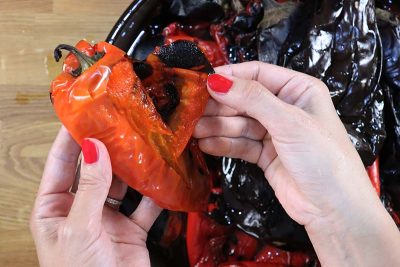
- While they're still warm, peel the vegetables, deseed them and remove the stems. Place them in a large strainer and leave overnight, allowing all of the juices to drip out.

Mixing the Ingredients
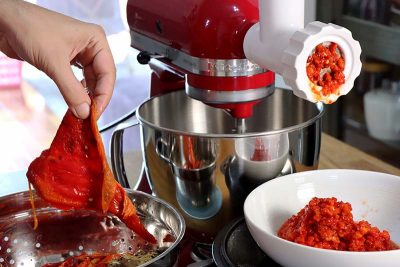
- The following day, run the vegetables through a meat grinder. Do not blend in a food processor or any other appliance because they will turn too mushy. A meat grinder is the only option.
Adjusting Consistency and Texture
- Pick a very large heavy-bottomed saucepan and place the ground vegetables in it. Set the heat on low and the timer for 3 hours. Once the mixture gets warm, begin adding oil every 20 minutes so that the ajvar becomes creamy. Stir constantly. Ajvar can easily stick to the bottom.
- After 1 hour, add salt, pepper and chilli flakes. Stir more. Near the end, add minced garlic, chopped parsley and vinegar. Spoon out some ajvar on a plate, let it cool down and do a taste test. Adjust the seasonings to taste.
- Sterilise the jars you'll be using in the oven. When they are dry, ladle or spoon in the ajvar. Clean the brims of the jars with a paper towel.
- Heat the oil in a small pot and pour a little into each jar so that a thin layer sits on top of the ajvar. Screw the lids on. Cover all the jars with a towel and allow them to cool down gradually.


Thank you for the wonderful presentation how to make home made ajar. Maybe I will try it one day. What kind of pepper in USA I can use, this what you used I never seen before.
Thanks, Maura. You can look for any type of sweet-tasting red peppers.