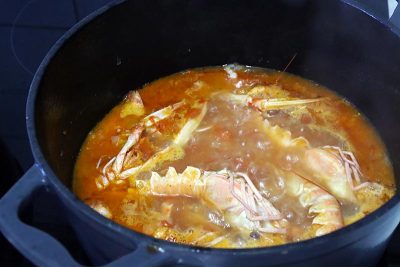
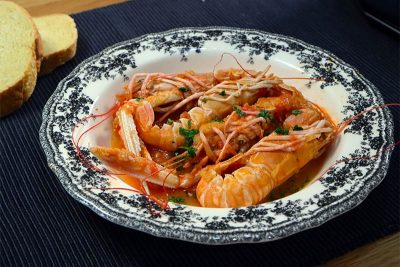
What are Škampi?
Škampi na buzaru is the dish that defines the word finger-licking. When something is out-of-this-world tasty, like škampi is, we forget table manners and lick every drop of juice from our fingers.
But let’s first define what škampi are. In Croatia, škampi are langoustines – a crustacean resembling a small lobster because of its pincer claws. Unlike prawns, langoustines are always cooked with their head and claws on. This is where the best flavors come from.

You can prepare škampi in many ways, but cooking it in the buzara sauce brings out the best of them. The deep sea aroma hides in those heads and claws. So when they slowly simmer in a large pot, they release their fantastic taste. The buzara sauce gets that attractive stickiness. And škampi tails keep their firm texture.
Škampi na buzaru is our go-to dish when we want to treat someone. If there’s a special occasion or a celebration, škampi are on the menu. This royal dish will impress every seafood lover, and it’s so easy to make.

Also, prepping škampi takes only a second. You only need to wash them. Unlike king prawns that need cleaning and deveining, škampi are best when cooked whole—no need to remove anything from them.
Are you a fan of saucy seafood dishes? Then, you will love my recipes for Hvarska Gregada and Dalmatian Brudet. Or you can browse the entire collection of traditional Dalmatian recipes.
Understanding 'Croatian Buzara Sauce'
Škampi and buzara sauce are a match made in heaven. But to understand why the buzara sauce makes this ingredient so fragrant, let me tell you more about this cooking technique.
Lots of Adriatic seafood, especially shells, can be cooked in the buzara style. So, when we say ‘na buzaru’ in Croatian, we are referring to a cooking style.

It’s an age-old way that fishermen used to prepare their catch on the boat. They would throw langoustines or shells into a busara (a large pot or a cauldron) to quickly simmer whatever they caught that day.
Because of this simplicity, buzara sauce keeps the seafood fresh and full of the sea aroma. Some aromatics, such as onion, garlic, and parsley, get infused in the olive oil. In go the škampi with all those sea flavors. To round up the taste, buzara needs some white wine. Finally, breadcrumbs are used to thicken it.
This is called ‘buzara na bijelo’ or the white buzara sauce. Today, adding tomatoes is the most common way to cook buzara sauce. With more depth and sweetness, this ‘crvena buzara’ or ‘buzara na pomidore’ is the best sauce for the škampi. We sometimes call the dish škampi na buzaru na dalmatinski.
When you cook škampi na buzaru, never forget the origin of the buzara sauce. Because this will guide you on how to eat škampi: from a big pot and with no cutlery.
Ultimate cookbook of traditional savory Croatian Dishes
This glossy, full color edition boasts: 100 step-by-step recipes, 386 pages, 700 images & expert cooking tips

Ingredients You'll Need for Škampi na Buzaru
It’s not always easy to guess how much škampi per person you need. This will depend on your appetite and how much you love the dish. Think ahead: are you serving škampi na buzaru as a starter or a main dish? Let’s see some of the options.

Necessary ingredients with quantities
The restaurant norm is about 250 g of škampi per person. I am crazy about this dish, and I can’t eat more than that. Don’t forget that the buzara sauce is so delicious and calls for quite a lot of bread to be sopped up.
If you’re cooking 1 kg of škampi for four people, you’ll need 500 ml of tomato juice and some cherry tomatoes. Set aside 200 ml of white wine for cooking; the rest you can drink.
Options for substitutions
Another crustacean pairs well with the buzara sauce: red prawn or shrimp. We call them kozice in Croatian. They are different from tiger or king prawns, which are grey when fresh and turn pink only when cooked.
You’ll find these red prawns at most fish markets. If they are small, there is no need to clean and devein them. But if you get large ones, you might want to remove their heads and clean and devein their tails.
Still, if it’s buzara sauce that I’m cooking, I like to leave any crustacean in one piece. It’s the flavor from the head that we’re after. So, leave the cleaning for when the dish is ready.
Serve a bowl of water next to your plate, and don’t be afraid to get your fingers dirty. The sauce will trickle down your elbows, but you’ll be in foodie heaven.
What to Serve with Škampi na Buzaru
Don’t overthink this question. My best advice is to have lots of bread served at the table. If you’re eating in a homely atmosphere where food presentation is not a priority, bread is the best thing to serve with škampi.
Polenta
Many soupy seafood dishes go well with polenta. This is the case with a fish brodetto and with škampi na buzaru.

If a nice plate is your goal, shape polenta into a cake and grill it. This will make your plate pop. Then, as you eat škampi, crumble the polenta with a fork and allow it to sop up the buzara sauce.
Pasta
Škampi with pasta is a dish in its own right. You can cook škampi na buzaru in the same way. Boil some spaghetti on the side and bathe them in the buzara sauce. Arrange the škampi on top. You might want to clean the škampi from their shell for this dish and serve only the tails. But cook them whole to get the best buzara sauce.
Grilled Vegetables
We all know that vegetables are healthy. But when a pot of škampi na buzaru calls your name, few of us will save space for the veggies. If you insist on the health factor, grill some peppers and aubergines and serve them on the side.
Tips for the Perfect Škampi na Buzaru
The recipe for škampi na buzaru is straightforward. But to take this dish to the level it deserves, pay attention to some pro tips.
Choosing fresh Škampi
Your škampi na buzaru will turn out best with the freshest of škampi. Visit a fish market and pick those so fresh they’re still wiggling. I never make this dish with frozen škampi. It’s such a special treat that I will wait until I can get my hands on the fresh produce.
When it comes to the size of the škampi, I like them to be big but not huge. Their tail should be bite-sized. If you get them bigger than that, their shell will be so hard that you’ll struggle to clean them before taking a bite.
Small škampi make a perfectly-flavored buzara, but eating them is a challenge. You’ll spend all your time shelling their tails and feeling hungrier with each bite.
Adjusting spice levels
The buzara sauce needs a good balance of seasoning. Garlic, parsley, salt, and pepper are the foundation. Tomatoes will add the sweetness, but if they are a bit acidic, you need to add a sprinkle of sugar. Use a dry white wine with a nice note of acidity, not sweetness.
When these flavors are balanced, you can add a touch of chilli sauce for the heat. We don’t do this in Croatian recipes, but why not if you’re a chilli fiend?
Common Mistakes to Avoid
Watch your škampi closely as they cook. One of the most common mistakes is leaving them in the pot for too long. 20 minutes should be enough for their tails to turn opaque. This means they’re done.
Don’t make the mistake of discarding the škampi heads and claws. When kids are served škampi, they normally eat the tails only, waiting for their parents to peel them. Don't be that kid. Trust the local way: suck out all the juices from the head and the claws. That's where the real flavor of the sea is.
Step-by-Step Guide to Škampi na Buzaru

Skampi Na Buzaru
Ingredients
- 1 large onion (finely chopped)
- 3-4 tbsp olive oil
- 6 cloves of garlic (minced)
- 4 tbsp chopped parsley leaves (divided)
- 3 tbsp breadcrumbs
- salt and black pepper to taste
- 1 handful of cherry tomatoes (chopped)
- 500 ml tomato juice (2 ¼ cups)
- 1 tbsp sugar
- 1 kg fresh medium-sized skampi (langoustines) (2.2 lbs)
- 200 ml water (1 cup)
- 200 ml dry white wine (1 cup)
Instructions
- In a heavy saucepan sauté the onion in olive oil. After about 15 minutes, add the garlic, breadcrumbs and half of the chopped parsley leaves. Season with salt and pepper.
- Add the cherry tomatoes for a deeper flavour. After they wilt, mix in the tomato juice and sugar.
- Throw in the langoustines. Pour water over them so they are almost submerged. Cover with a lid and simmer for 15-20 minutes. The langoustines are done when their meaty tail becomes opaque.

- Add wine and simmer for another 5 minutes. Garnish with the rest of the chopped parsley leaves.
- Serve with crusty white bread and a bowl of water on the side for washing your fingers.