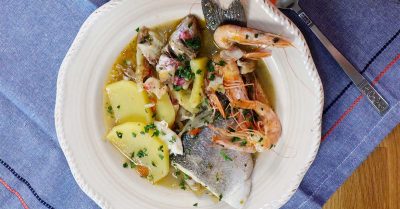
What is Hvarska Gregada?
Gregada is a rich Croatian fish stew serving both as a soup and a main course. It's an ingenious seafood recipe, some would say. They are right because you can make gregada as a mid-week feast. You don't need much time, just some premium-quality fish.

The posh version is Hvarska Gregada because it includes prawns and salted anchovies. Hvarska Gregada packs a surprising punch, with sea-salty flavor and a deep umami kick.
Ingredients for Authentic Hvarska Gregada
Gregada recipe shouldn’t intimidate you. This divine dish attracts with its complex taste but its origin is quite modest. Concocted by fishermen out on the sea, Gregada is a fish pot you can make with any white fish. So, let’s break down the list of ingredients.
Fresh, Seasonal Fish - Choosing the Perfect Catch
You must only follow one rule when choosing the right fish for the Gregada recipe. Pick white fish of any size or type; say no to oily fish. Here is what this looks like in practice.
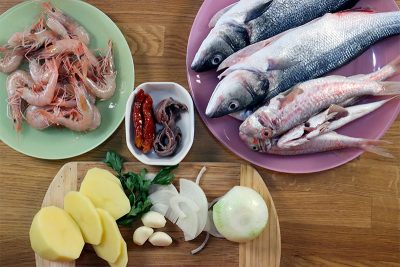
I consider good quality white fish the following types: cod, red mullet, sea bream, sea bass, John Dory, scorpionfish, and hake.

Invite these fellows to your gregada pot. If you can get fresh fish, that's all the better. But Hvarska Gregada works even with frozen cod. You also don’t have to break the bank looking for prime specimens of fish, which usually go on the grill.
Avoid oily fish, such as sardines, anchovies, or mackerel. These can make the stew juices too heavy and greasy. Notice that a few salted anchovies go into the gregada paste. But this is only to develop the flavor, not to bulk up on fish.
Potatoes
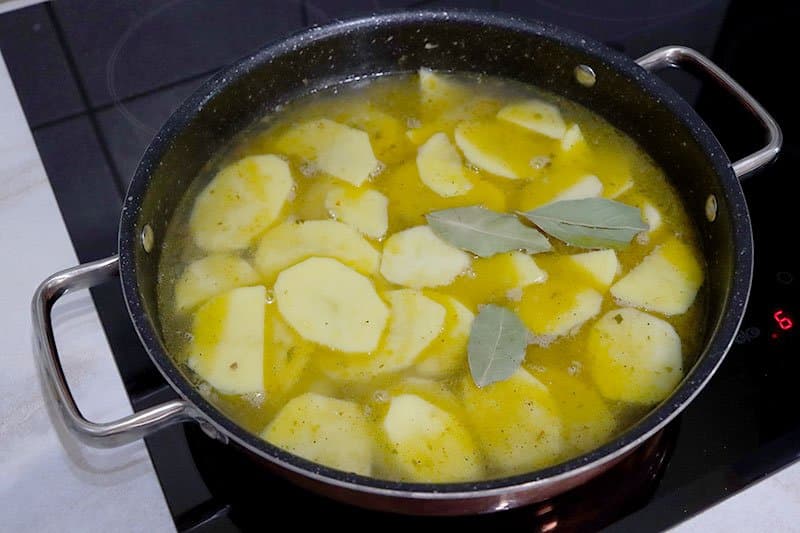
Gregada recipe calls for thinly sliced potatoes. To hold their shape during cooking, pick any variety of waxy potatoes. These have smooth, dense flesh and won’t easily crumble.
Imagine Hvarska Greagda served in a deep plate. The potatoes must remain their elegant shape and feel al dente as you bite into them.
This is why we start cooking potatoes before adding fish to the pot.
White wine
Most Croatian seafood recipes turn out best when cooked with dry white wine. The wine should also have pronounced acidity. I love to cook with high-quality graševina, malvazija or pošip.
Yes, I don’t skimp on my cooking wine. What goes into your Croatian recipe should be as good as what you pair your food with.
Fresh herbs and aromatics
Rosemary and bay leaves are sturdy herbs that hold their own in the pot. Throw them in as gregada slowly simmers. Fresh parsley leaves, on the other hand, are delicate. Chop them up and reserve them until the very end. Even better, sprinkle some on each bowl of gregada before serving.
Now is an excellent moment to discuss the difference between plain Gregada and Hvarska Gregada. The former features fish, potatoes, and basic herbs.
Hvarska Gregada gets an upgrade from prawns or langoustines. But there is more juice hiding in the stew. It’s a Gregada paste from sun-dried tomatoes, salted anchovies, and capers.
These three ingredients together give Gregada recipe its signature flavor. It’s like the sea explodes on your tongue, and the aerosol spreads up through your nose.
The paste is not optional. Once you try Hvarska Gregada, you’ll recognize its effect.
Ultimate cookbook of traditional savory Croatian Dishes
This glossy, full color edition boasts: 100 step-by-step recipes, 386 pages, 700 images & expert cooking tips

Preparing the Fish and Vegetables
Prepping the Fish
Before diving into cooking your Croatian fish stew, let’s review some tips and tricks.
If you find yourself in Croatia, buy fish at a fish market. The most common types of fish available year-round are sea bream, sea bass, and red mullet.
I suggest you get a line-caught variety. Ask the fishmonger about their sea bream and bass because these fish are also farmed. Red mullet is a great addition to the pot because its color gives Gregada a distinct taste.
All these fish have scales, so you need to descale and gut them. Again, ask the fishmonger to do it for you.

Before you add it to the pot, consider the size. Each fish piece needs to be roughly fist-sized. So, cut those that are bigger. Finally, leave the heads on. I know, I know, most of you hate seeing the fish’s head on your plate. But make an exception. Remember that heads are what give a robust and flavorful stock.
Prawns and langoustines don’t require any special treatment. Just throw them in and enjoy eating them.
Slicing and Chopping the Veggies
Both onions and potatoes should be sliced thinly. But how thin is optimally thin? Aim for skinny onion slices that will turn mushy as they cook. But potatoes must remain firm, so cut them into slices half the width of your pinky finger.

Gregada paste is best made by hand. Use a sharp chef’s knife and chop all three ingredients into tiny pieces. Fold them over several times and continue chopping. This technique gives the best texture to the finished dish.
If you were to blend them, you would need more liquid, and this only dilutes the fish stew.
Serving Suggestions for Hvarska Gregada
The most traditional way to serve Hvarska Gregada is in a deep plate. Not a bowl, but a plate that holds more liquid. After all, we are cooking a fish stew.
This fantastic Croatian seafood is a typical example of our ‘na žlicu’ menu. We like our food stewy enough to eat it with a spoon. It’s our deep-seated belief that if we eat from a deep plate, we are not only fed but adequately nourished.
You might want to try other seafood dishes from a deep plate. Try my recipes for Dalmatian Brudet (fish stew) and Škampi Na Buzaru.

You can serve a bowl of crusty white bread with Gregada. This won’t make it healthier because who else eats potatoes with bread? But those fish juices are so irresistible they must be mopped up.
Consider saving this recipe for a Christmas Eve dinner. If you normally eat Croatian cod stew for this occasion, try Gregada one year.
Now it’s time to uncork a great bottle of wine. Here are my top choices...
Premium Graševina from Iločki Podrumi winery. Next is Pošip from Hvar Hills or Korta Katarina wineries. In Istria, a great Malavazija comes from Kozlović winery. Any of these will take you on the unforgettable Croatia seafood journey.
Step-by-Step Instructions for Making Hvarska Gregada
Hvarska Gregada - Croatian Fish Stew
Ingredients
- 2 medium onions (sliced)
- 100 ml olive oil, divided in 2 parts (1/2 cup)
- 8 cloves of garlic (minced)
- 4 medium potatoes (thinly sliced)
- 400-500 ml water (2 – 2 1/2 cups)
- 250 ml dry white wine (1 1/4 cups)
- salt and pepper to taste
- 2 bay leaves
- 1 sprig rosemary
- 1 kg good whitefish (cod, red mullet, sea bream, sea bass, John Dory, scorpionfish, hake) (2.2 lbs)
- 300 g prawns/langoustines (0.6 lb)
- 3 tbsp chopped parsley leaves
For the paste:
- 2 tbsp chopped sun-dried tomatoes
- 6 fillets of salted anchovies
- 2 tbsp capers
Instructions
- Pick a wide, medium-deep pan that holds a lid. Slice the onion and sauté it in olive oil until translucent (about 15 minutes). Add the garlic at the end and fry it for 2-3 minutes.

- Make the paste by finely chopping the sun-dried tomatoes, anchovies and capers. This is a Dalmatian version of the umami flavour. Mix the paste into the onions.
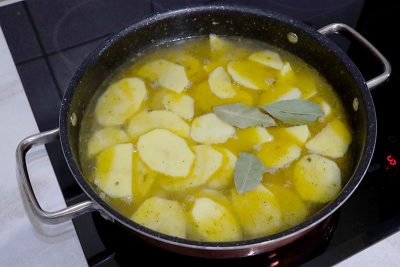
- Layer the potatoes on top of the onions and the paste. Pour in water and wine. Season with salt (careful because the anchovies are salty!), pepper, bay leaves and rosemary. Put the lid on and simmer on medium-low heat until the potatoes are half done (about 15-20 minutes).
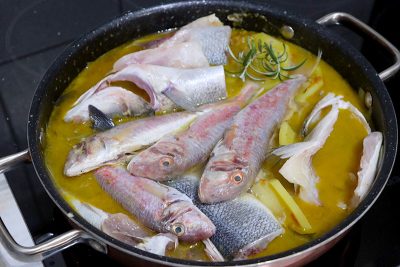
- Prepare the fish by descaling and gutting it. Cut larger fish into fist-sized pieces and leave the heads on. Arrange them on top of the potatoes. The contents should be only 3/4 covered with liquid.
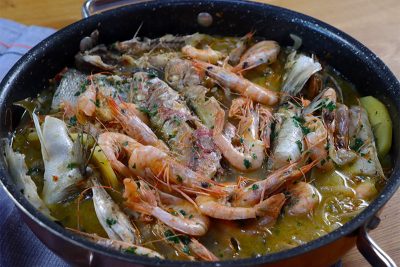
- Cover the pot with the lid. Do not stir. Just shake the entire pan occasionally. Cook for about 10-12 minutes. Lastly, add the washed prawns or langoustines and cook for 3-5 more minutes. Prawns and langoustines are done when their tails turn opaque.
- Sprinkle with chopped parsley and drizzle with more olive oil. Serve immediately.